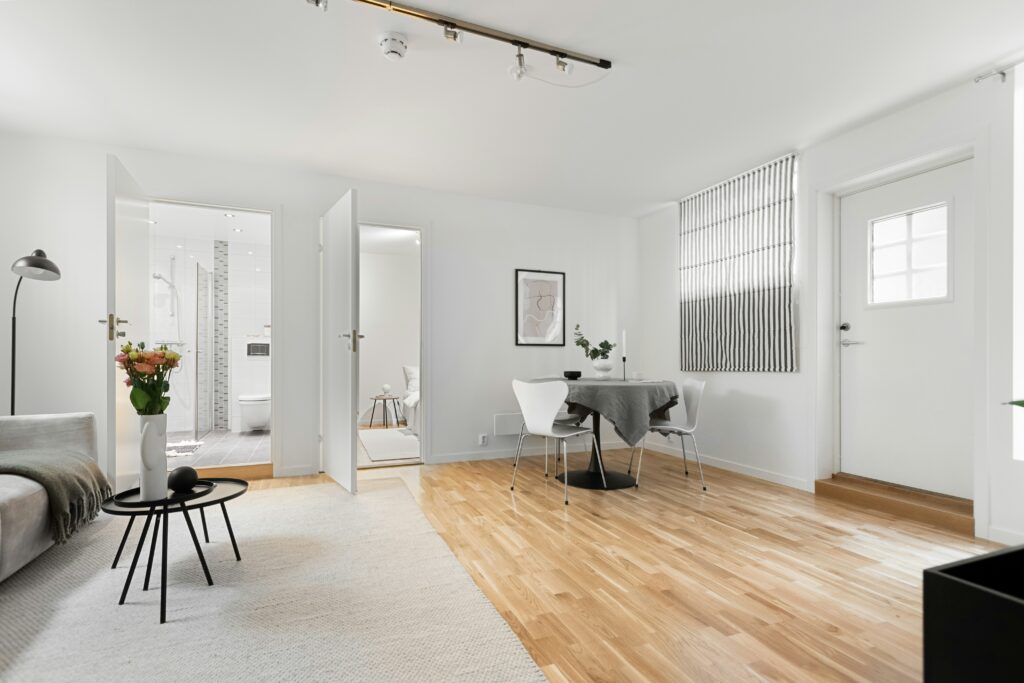
There’s a version of Spanish property investment that involves buying something already finished, handing it to a management company, and waiting for the income to arrive. That wasn’t my version.
My flat in Elche needed everything — a full strip-out, new electrics, new plumbing, new kitchen, new bathrooms, new windows, new floors. The kind of job most buyers would walk away from. I walked toward it, partly because the purchase price reflected the condition, you can see the full breakdown of what buying in Alicante actually costs, and partly because I understood something that took a little research to confirm: in the long-term rental market, a newly refurbished property isn’t just nicer — it commands a higher monthly rent, attracts better tenants more easily, and opens doors that a tired unrenovated flat simply won’t.
One of those doors was the high-spec property management company I work with. They curate the properties they’re willing to represent, and a full gut-and-refurb to a good finish was what got us through. The relationship that followed has been one of the most valuable parts of this whole project. There’s a circular logic to it: they trust the properties they manage, the tenants trust the properties they move into, and I trust that my asset is being looked after. That only works if the starting point is right.
I was also fortunate in who I found to do the work. My builder had prior experience finishing properties to a high spec for their own luxury flip projects — which meant they weren’t learning on mine. That matters more than almost anything else when you’re managing a renovation from another country.
It was nerve-wracking. It was exciting. And it worked.
What a full refurbishment actually covers
When builders in Spain quote for a full renovation, they structure it in chapters. Understanding what each one includes is useful both for reading quotes and for knowing what to push back on if something is missing.
Demolition comes first — removing partition walls, stripping tiles, clearing all old electrical runs and plumbing, taking out the sanitary ware, the kitchen units and the old water heater, and finishing with a thorough end-of-build clean and licensed waste disposal. Unglamorous, but substantial.
Construction follows: in my case, new tiling in bathrooms and kitchen, new porcelain floor tiles in the wet rooms, new moisture-resistant plasterboard ceilings in the bathrooms, and a new partition wall to create a second bathroom where one hadn’t existed.
Finishes: full replaster and paint throughout, new oak-effect floating laminate flooring in all rooms except bathrooms and kitchen, and new skirting boards throughout. The walls came out plain white with neatly rounded corner edges — clean and simple, which suited the scandi direction I’d chosen.
Carpentry: new white internal doors throughout with handles and working locks, and aluminium double-glazed windows with integrated shutters replacing the old wooden frames on three rooms — the living room and gallery window were left as they were.
Electrics: complete rewire of all lines, new sockets and switches throughout, official electrical certificate (the boletín eléctrico, which is a legal requirement in Spain), and downlights in the kitchen, bathrooms and hallways.
Plumbing: full replacement of all hot and cold water lines and drainage, new sanitary ware in both bathrooms — shower trays, screens, WCs, basins and taps — and replacement of the old gas water heater with a 150-litre electric unit.
Kitchen: new fitted units in white with a wood-effect laminate worktop, and integrated appliances — oven, hob, extractor fan, sink and tap. The washing machine was also built in.
That is a comprehensive scope of work. Use it as a checklist when reading quotes. If entire categories are missing — no electrical certificate, no waste disposal, no mention of windows — push back and ask why. One thing to check separately: council permits. My quote explicitly excluded local authority fees of approximately €500. Always ask what isn’t included before you compare figures.
What it costs — a framework for budgeting
I’m not publishing my exact figures — that’s an agreement I’ve made with my builder — but here’s a genuinely useful framework.
A full renovation to rental standard in the Alicante region runs at roughly €300–€400 per square metre. As a rough guide by property size:
- 50sqm (1-bed): €15,000–€20,000
- 75sqm (2-bed): €22,500–€30,000
- 100sqm (3-4 bed): €30,000–€40,000
All figures exclude IVA at 21%. Always check whether a quote is ex or inc IVA before comparing — on a mid-range renovation the difference runs to thousands, and it’s an easy mistake when two quotes aren’t presented the same way.
Build in a contingency of 10–15% on top of any quoted figure. Something unexpected will come up. A non-standard door frame. A council permit your builder didn’t include. An electrical capacity upgrade — more on that below. The contingency isn’t pessimism; it’s just how this works.
How payment works — and what to watch out for
Refurbishment in Spain is typically paid in instalments tied to project milestones — a deposit to start, further payments as work progresses, and a final balance on completion. This is standard practice and nothing to be alarmed by.
What is not standard is being asked for the full project cost upfront before work begins. If that’s what you’re being asked for, ask questions. A reputable builder doesn’t need your full budget in hand before a single wall has been touched. Staged payments protect both parties — and this kind of pressure is one of the warning signs I cover in more detail in my guide to avoiding scams when buying property in Spain.
The timeline — what to expect and when
I signed the construction contract in August 2025. The builders technically completed the work within the one-month timeline the contract specified — which, for a full gut-and-refurb, is fast. In practice, snagging continued into January.
My first visit was in November 2025, when the structural work was largely done. I came with my son, who promptly sprinted to the balcony to peer down at the street below — which gave the construction lead a minor heart attack and gave me my first real look at the space. It was further along than I’d dared hope.
The decorator went in during December to complete the furnishing and styling. My second visit was in January, when I arrived with my husband, sister and son — considerably more nervous this time, because I was presenting the finished result to people I cared about, having spent all our savings on a project I’d managed largely by faith from London. I genuinely had no idea how far “furnished” was going to mean in practice. The answer, as it turned out, was: properly furnished.
Five months from contract to that January handover, for a full renovation of this scope, is reasonable. If you’re buying with a specific tenancy start date in mind, work backwards from that date and build in buffer.
Managing the build from another country
I was in London for the entire build. I relied on video updates sent through regularly by the team — room by room, showing what had been done. I didn’t always understand the Spanish commentary, but I could see the flat taking shape and raise questions if something looked off.
If you’re planning to manage a Spanish refurbishment remotely, ask upfront how your builder communicates progress. Video walkthroughs are better than photos. Anyone experienced with overseas buyers will understand why you need them.
One detail worth mentioning: where the WiFi cable would eventually enter the flat, the builder had prepared a neat purpose-built hole with a finished cover plate rather than just leaving a rough entry point. It was a small thing — anticipating an installation that hadn’t even happened yet — but it was the moment I stopped second-guessing the level of finish I was going to get.
The electrical question you should ask — but probably won’t think to
A complete rewire is standard in an older Spanish flat, and it was included in my quote. What I hadn’t anticipated was an additional electrical capacity upgrade for the building — approximately €150 — required as part of bringing the flat up to current standards. It’s a relatively minor cost, but it wasn’t in the original quote, and it’s the kind of thing that can catch you off guard if you don’t know to ask.
There’s also a broader question worth raising with your builder: earthing. Anecdotally, a friend who moved to Spain found that her entire building was unearthed — not just her flat, the whole block. She got her own flat’s electrics earthed; the rest of the building remains that way. I can’t tell you how this sits against Spanish regulations, but it’s worth asking the question directly before you sign off on a finished rewire.
And a note on my first week in the flat: the lights were going out repeatedly — I was counting an average of seven interruptions a day, mid-dinner, mid-bath, mid-toddler. It turned out to be related to the electrical capacity work. Once that was resolved in the first week, there were no further issues at all. If you experience something similar after handover, the capacity upgrade is the first thing to check.
Choosing your finish
My builder offered three interior design directions. A scandi-inspired style — light woods, clean lines, white. A traditional Spanish style, warmer and more ornate. And a dark minimalist option — striking but not right for what I was trying to build.
I went with scandi. Whether the finish influenced who ended up in the flat, I’ll never know for certain. All three of my current tenants are women. The flat feels like a home. That was always the quiet ambition.
What the flat came with
When I walked in for that second visit in January, the flat was genuinely move-in ready. Every bedroom had a ceiling fan with integrated light fitting, a wall-mounted TV, a double bed, wardrobe, and a small desk and chair. The kitchen had everything: pots, pans, plates, microwave, oven and hob, chopping boards, cutlery. The washing machine was installed. Bedding, blankets and cushions throughout.
I arrived not knowing what “furnished” really meant in this context. The answer was: everything. My husband, sister and son walked around in something close to disbelief. So did I.
This isn’t guaranteed — it depends entirely on what you agree upfront. But when you’re scoping the job, ask directly: what does furnished mean in your quote? Does it include bedding? Kitchen equipment? Get it in writing.
Snagging — what to expect after handover
There will be things to fix after handover. That’s not a criticism — it’s just how building works. What matters is that your builder responds.
Mine did. Over the weeks following completion, a short list of issues came through: some staining on the bathroom walls; WiFi cables left too low across the balcony and needing to be raised; a section of the kitchen worktop edge coming away and catching the fridge door when opened; door stoppers needed to protect the painted walls from handles; and the intercom label outside the building still showing the previous occupant’s name.
None of these were serious. All of them were things you only notice once you’re living in the space. The lesson is to give yourself proper time in the flat after handover, go through every room methodically, and log everything in writing — WhatsApp works well for this, because it creates a timestamped record of what was raised and when.
I lost the bulk of my photos from this period due to a cloud backup issue. If you’re documenting a snagging process, back up your images somewhere more robust than your phone’s automatic sync.
Once the build is done: insurance and letting
With the flat finished and furnished, there were two things to sort before the first tenants moved in: landlord insurance and rental registration. I’ve written about both separately — landlord insurance for a Spanish rental property is its own topic, and registering to rent legally in Alicante province involves a specific process through the NRUA that I’d encourage you to read about before your first tenancy starts
A note on the creative side of this
Before this flat, I renovated my first London home myself — chose the tiles, picked the kitchen, made every decision, was there for every stage. This was different. This flat was always going to be someone else’s home.
There was a small, quiet sense of loss for the creative process. If you’ve renovated your own property before, you’ll probably recognise the feeling. It doesn’t mean anything is wrong — it just means you care about the work, which is probably a good sign in an investor.
It passed. The builder made good decisions. Three women are living there now, and the flat looks exactly like what I hoped it would become.